

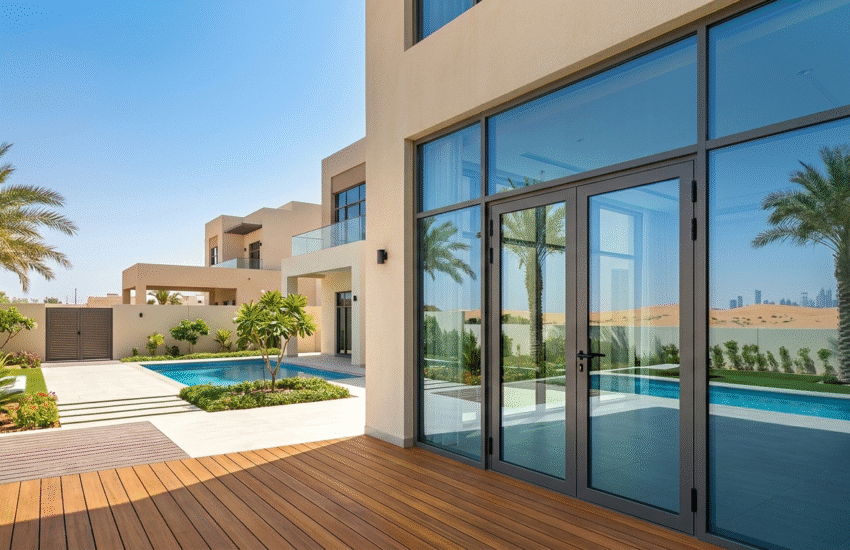
In Saudi Arabia, controlling heat inside a villa is not a luxury. It is a necessity.
Exterior doors play a direct role in how much heat enters a home, yet many homeowners focus only on design and security. As a result, they install doors that look good but allow heat transfer, increasing indoor temperatures and energy consumption.
Thermal break doors solve this problem. They are engineered specifically to reduce heat transfer, making them one of the most effective solutions for energy-efficient villas in Saudi Arabia.
What a Thermal Break Door Actually Does
A thermal break door is designed to interrupt the natural flow of heat through metal.
Standard aluminum doors conduct heat easily. When exposed to sunlight, the outer frame heats up and transfers that heat directly to the interior side. This creates temperature imbalance near entrances and increases the load on air-conditioning systems.
A thermal break system introduces a non-conductive barrier within the frame. This barrier separates the exterior and interior aluminum sections, significantly reducing heat transfer.
In real-world conditions, this difference becomes noticeable during peak summer hours. Villas with thermal break doors maintain more stable indoor temperatures, especially in entrance areas exposed to direct sunlight.
Why Thermal Break Doors Matter in Saudi Climate
Saudi Arabia experiences long periods of extreme heat. Exterior surfaces absorb solar radiation throughout the day, and materials with high conductivity amplify this effect.
From project experience in Riyadh and the Eastern Province, standard aluminum doors often become hot to the touch by midday. This heat radiates inward and affects nearby indoor spaces.
Thermal break doors prevent this heat movement. They improve insulation performance and reduce the impact of external temperatures on interior comfort.
For villas with large façades or direct sun exposure, the difference in thermal performance is significant.
Energy Efficiency and Long-Term Savings
Air-conditioning accounts for a large portion of energy consumption in Saudi homes. Any reduction in heat gain directly lowers cooling demand.
Thermal break doors reduce energy loss by maintaining separation between exterior heat and interior air-conditioned environments. Over time, this contributes to lower electricity bills and more efficient cooling performance.
In larger villas, even small improvements in insulation can result in noticeable energy savings across the year.
Energy efficiency is no longer optional. It is becoming a standard expectation in modern Saudi construction.
Structural Strength and Design Flexibility
Thermal break doors are typically built using advanced aluminum systems. These systems maintain structural strength while incorporating insulation barriers.
This allows architects to design:
- Large entrance doors with glass integration
- Minimal frame profiles
- Modern façade-aligned entrances
- Double-height door systems
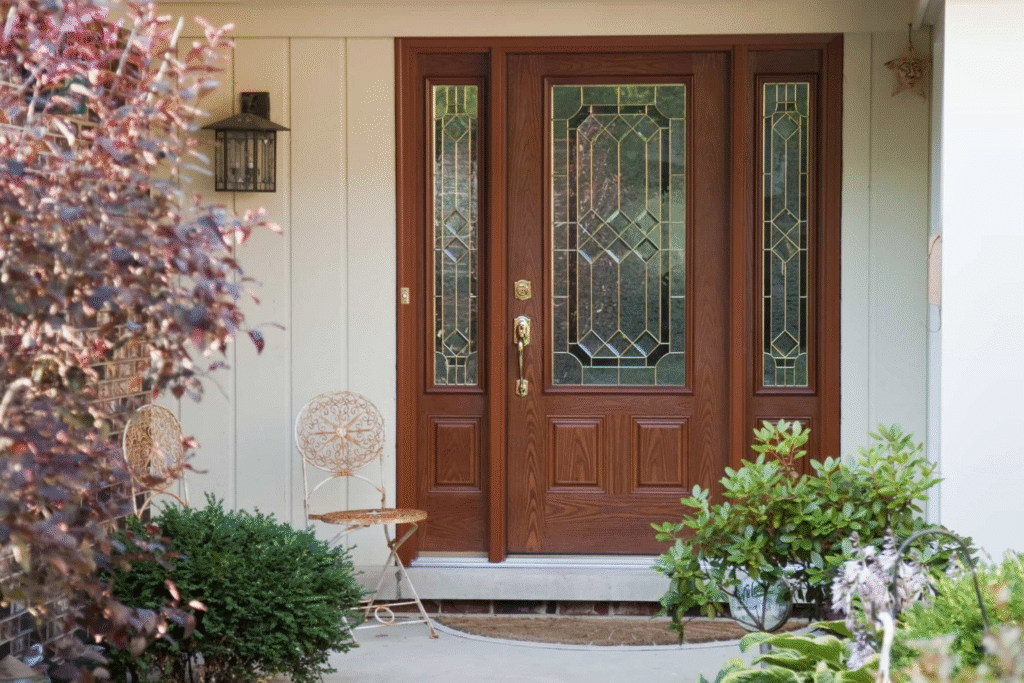
Unlike traditional insulated doors, thermal break systems do not compromise design flexibility. They combine engineering performance with contemporary aesthetics.
This makes them suitable for high-end villas and architect-designed residences.
Glass Integration and Thermal Performance
Glass plays an important role in overall door performance. In thermal break systems, the glazing must match the frame’s insulation capability.
Double-glazed or low-emissivity glass improves heat resistance and reduces solar gain. Laminated glass adds security while maintaining clarity.
In Saudi villas, tinted or reflective glazing is often used to reduce glare and limit heat penetration, especially on west-facing entrances.
When glass and frame work together, the entire door system performs efficiently.
Let’s Talk — Get Your Quote Fast
Need pricing, drawings, or quick product guidance? Contact Maskni Alzaki and we’ll respond with a tailored quotation and technical support.
Thermal Break vs Standard Aluminum Doors
The difference between standard aluminum and thermal break doors becomes clear over time.
Standard aluminum doors allow continuous heat transfer, which affects indoor comfort and increases energy usage. They may perform adequately in mild climates but struggle under Saudi conditions.
Thermal break doors provide insulation, reduce condensation risk, and maintain more stable indoor temperatures. They are specifically designed for climates where heat control is critical.
For villa owners investing in long-term performance, thermal break systems offer clear advantages.
Installation Precision and System Performance
Thermal break doors require precise installation to maintain insulation performance. Poor installation can create gaps that reduce effectiveness.
Proper installation includes accurate frame alignment, secure anchoring, and complete perimeter sealing. Insulation materials around the frame must be applied correctly to prevent thermal bridging.
Experienced installers ensure that the door system performs as intended under real climate conditions.
Maintenance and Durability
Thermal break doors require minimal maintenance. The aluminum structure resists corrosion, and high-quality coatings protect against UV exposure.
Regular cleaning and occasional hardware lubrication keep the system operating smoothly. The internal thermal barrier remains stable over time and does not degrade under normal use.
This makes thermal break doors a long-term solution for Saudi villas.
When Should You Choose a Thermal Break Door?
Thermal break doors are ideal for:
- Villas exposed to direct sunlight
- High-end residential projects
- Energy-efficient buildings
- Homes with large glass entrances
- Coastal and high-temperature regions
They are particularly valuable when comfort and energy savings are priorities.
Final Perspective
Thermal break doors represent a shift in how exterior doors are evaluated in Saudi Arabia. They are no longer just entry points. They are part of the building’s thermal system.
When properly specified and installed, they reduce heat transfer, improve indoor comfort, and support long-term energy efficiency.
For villa owners looking beyond basic functionality, thermal break doors offer a combination of performance, durability, and modern design that aligns with the demands of Saudi living.

