

When selecting windows for a villa in Saudi Arabia, homeowners increasingly look beyond basic sliding and casement designs. They want windows that provide reliable ventilation, good thermal insulation, easy maintenance, security, and a modern appearance without creating unnecessary complexity.
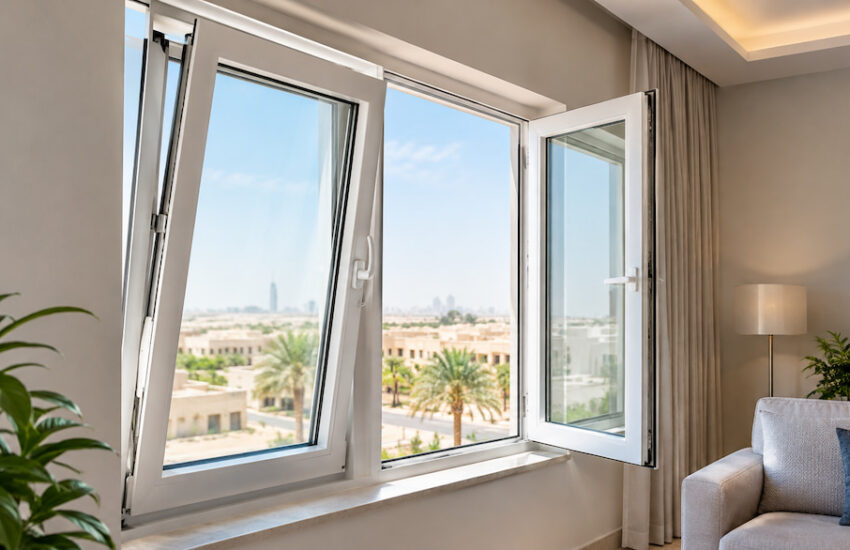
Tilt and turn uPVC windows offer a practical solution because they combine two opening functions in one system. The window can tilt inward from the top for controlled ventilation or open inward from the side when a larger opening is required. This makes the system particularly useful for rooms where homeowners want flexibility without installing two different window types.
For Saudi villas, however, the important question is not simply whether tilt and turn windows look modern. Their suitability depends on the climate, room requirements, glazing, profile construction, hardware, and installation quality.
What Are Tilt and Turn uPVC Windows?
A tilt and turn window uses specialised hardware that allows the same sash to operate in two different ways. In the tilt position, the top of the sash moves inward while the lower section remains connected to the frame. This creates a controlled opening near the top of the window, allowing ventilation while keeping the opening relatively restricted.
In the turn position, the sash opens inward from the side, creating a much wider opening for ventilation and access. The homeowner controls both functions through the window handle. This dual operation makes tilt and turn windows different from conventional casement windows, which normally open through a single hinged movement.
For villa projects, this flexibility can make the system particularly useful in bedrooms, living areas, kitchens, bathrooms, and other spaces where ventilation requirements change throughout the day.
Why Tilt and Turn Windows Suit Saudi Homes
Saudi Arabia has a demanding climate for residential windows. High summer temperatures, strong solar exposure, dust, and extensive air conditioning use make the performance of the building envelope particularly important.
Tilt and turn uPVC windows can support this requirement through their frame construction and multi-point locking system. When the window is closed, the sash presses against the seals around the frame, helping create a controlled barrier between the indoor and outdoor environment.
When natural ventilation is appropriate, the tilt function allows homeowners to introduce airflow without fully opening the window. This can be useful during cooler periods when residents want ventilation without leaving a large opening exposed to the outside environment.
Thermal Insulation and Heat Control
One of the main reasons homeowners consider uPVC windows for Saudi villas is thermal insulation. uPVC has relatively low thermal conductivity compared with conventional aluminum, and multi-chamber profiles can further improve resistance to heat transfer through the frame.
However, the frame is only one part of the thermal system. The glazing specification has an equally important role. A tilt and turn window with an insulated uPVC profile can be combined with double glazing, Low-E glass, or solar-control glazing depending on the requirements of the property. This combination can help reduce unwanted heat transfer and improve indoor comfort.
For a villa in Riyadh, for example, a large west-facing window may require more attention to solar control than a shaded opening on another elevation. The glazing should therefore be selected according to the location and exposure of each opening.
The Tilt Function and Natural Ventilation
The tilt function is one of the most useful features of this window style. Instead of opening the entire sash, homeowners can tilt the upper part inward to create a smaller ventilation opening. This can allow air movement while keeping the window in a more controlled position.
This is particularly useful in bedrooms and living spaces where residents want ventilation without creating a wide opening. It can also be practical during mild weather when the air conditioning is switched off and natural airflow becomes desirable.
The tilt position should not be treated as a replacement for mechanical ventilation where a building requires dedicated ventilation systems. It is simply a flexible way to introduce natural airflow when outdoor conditions are suitable.
Full Opening When More Ventilation Is Needed
The second operating position allows the sash to open inward from the side. This creates a much larger opening than the tilt position and can provide stronger natural ventilation when weather conditions allow.
For example, a homeowner may keep a bedroom window tilted during part of the day and fully open it when cleaning the room or when stronger airflow is required. This dual functionality means one window system can support different daily requirements without changing the hardware or adding another opening mechanism.
Better Control Over Indoor Comfort
Saudi homes rely heavily on air conditioning for much of the year, but there are periods when natural ventilation can be useful. The ability to control how much the window opens gives homeowners more flexibility. During mild weather, the window can be opened fully to encourage airflow. When only limited ventilation is required, the tilt position can provide a smaller opening.
When the air conditioning is running, the window can remain completely closed, allowing the seals and glazing system to perform their intended function. This flexibility makes the system particularly suitable for homeowners who want more control over how their villa responds to changing outdoor conditions.
Dust Protection in Saudi Arabia
Dust is an unavoidable consideration when selecting windows for many Saudi properties. A properly closed tilt and turn window can provide effective sealing around the sash, helping reduce unwanted air and dust infiltration. The quality of the seals and installation has a direct effect on this performance.
The tilt function can also be useful because homeowners do not always need to fully open the window to introduce some ventilation. However, no window can completely prevent dust from entering a property when it is left open during dusty conditions. Homeowners should therefore consider weather conditions before using the ventilation function.
Regular cleaning of the frame, seals, drainage channels, and hardware also helps maintain the window’s performance.
Security Features
Security is another important consideration for villa windows, particularly on ground floors and other accessible areas. Tilt and turn systems can incorporate multi-point locking hardware that secures the sash at several points around the frame. This provides a more controlled locking arrangement than a simple single-point latch.
The glazing specification also matters. For properties where additional security is required, laminated or other specialised safety glazing can be considered. The overall security of the window depends on the frame, reinforcement, glass, hardware, installation, and surrounding wall construction. No individual component should be considered in isolation.
Are Tilt and Turn Windows Suitable for Bedrooms?
Bedrooms are one of the most practical applications for tilt and turn uPVC windows. The tilt position provides controlled ventilation without requiring the full sash to remain open. This can be useful at night or during mild weather when occupants want some airflow while maintaining a more restricted opening.
The system can also provide good thermal and acoustic performance when combined with suitable glazing and seals. For bedrooms facing busy roads, acoustic glazing can be considered alongside the uPVC profile to improve indoor comfort.
Tilt and Turn Windows for Living Rooms
Living rooms often require a balance between natural light, ventilation, appearance, and thermal performance. Tilt and turn windows can provide a clean contemporary appearance while offering two ventilation positions. Larger configurations can be designed to complement the architectural style of the villa.
For living rooms with large glazed areas, the glass specification becomes particularly important. Solar-control or Low-E glazing may be appropriate where direct sunlight creates excessive heat gain. The final configuration should reflect the size and orientation of the opening rather than simply selecting the largest available window.
Tilt and Turn Windows for Kitchens
Kitchens can benefit from flexible ventilation because cooking produces heat, moisture, and odours. The tilt function allows homeowners to introduce controlled airflow without fully opening the window. When stronger ventilation is required, the sash can be opened further.
The position of the window should also be considered carefully. If the opening sits close to kitchen cabinets or worktops, the inward movement of the sash needs to be checked before installation. This is an important practical difference between tilt and turn windows and outward-opening systems.
Let’s Talk — Get Your Quote Fast
Need pricing, drawings, or quick product guidance? Contact Maskni Alzaki and we’ll respond with a tailored quotation and technical support.
Are Tilt and Turn Windows Good for Bathrooms?
They can be particularly useful for bathrooms where controlled ventilation is important. The tilt position can provide airflow while maintaining a smaller opening. Privacy glazing can also be specified to allow natural light while limiting visibility.
Because bathrooms have higher humidity levels, the surrounding wall construction and ventilation strategy should also be properly designed. A window alone should not be relied upon as the property’s only moisture-control solution.
Double Glazing for Tilt and Turn Windows
Double glazing can significantly influence the overall performance of a tilt and turn window. The insulated glass unit contains two panes separated by a cavity, reducing direct heat transfer through the glazing compared with basic single glazing.
For Saudi villas, homeowners may also consider Low-E or solar-control glass where solar exposure is high. The appropriate specification depends on the property’s location, façade orientation, window size, and thermal requirements. A supplier should recommend the glazing based on these factors rather than automatically using the same glass throughout the property.
uPVC Profile Quality Matters
Not all uPVC profiles provide the same performance. A good tilt and turn system should have a profile suitable for the intended window dimensions, glazing weight, climate, and hardware configuration. Multi-chamber construction can improve thermal performance, while appropriate reinforcement may be required for larger openings.
The profile should also accommodate reliable seals and hardware that can maintain consistent compression when the window is closed. For a villa project, homeowners should ask the supplier which profile system is being proposed rather than accepting a quotation that simply states “uPVC windows.”
Hardware Is Particularly Important
Tilt and turn windows rely on specialised hardware to operate correctly in both positions. The handle, hinges, locking points, keeps, and other components need to work together accurately. Poor-quality hardware can affect smooth operation and may require more frequent adjustment.
For large or frequently used windows, hardware quality becomes even more important because the components carry the weight of the sash and glazing. In coastal cities such as Jeddah, Dammam, and Khobar, hardware should also be selected with the local environmental conditions in mind.
Installation and Adjustment
The installation of a tilt and turn window requires more attention than simply placing the frame into the wall opening. The frame must be correctly positioned and levelled so that the sash operates smoothly. The perimeter needs to be appropriately sealed, and the hardware should be adjusted after installation.
If the frame is not properly aligned, homeowners may experience difficulty turning the handle, uneven sealing, or problems with the sash opening and closing. For this reason, professional installation is an important part of the final window specification.
Tilt and Turn Windows in Riyadh
Tilt and turn uPVC windows can be well suited to Riyadh villas because they combine thermal insulation with flexible ventilation. During periods of extreme heat, homeowners can keep the windows closed and rely on the building’s cooling system. During milder weather, the tilt function can provide controlled ventilation without requiring a full opening.
The glazing should be selected according to solar exposure, particularly for windows facing strong afternoon sunlight. A well-sealed installation also helps limit dust infiltration when the windows remain closed.
Tilt and Turn Windows in Jeddah, Dammam and Khobar
Coastal Saudi cities require additional attention to humidity and environmental exposure. The uPVC profile itself is resistant to rust, but the complete system includes metal hardware, reinforcement, fasteners, and other components.
For coastal villas, homeowners should ask about the suitability of these components for the local environment. The glazing should also address the strong sunlight experienced by coastal properties, while the seals and installation should provide an effective barrier against outdoor air and moisture.
What Are the Disadvantages?
Tilt and turn windows offer several advantages, but they are not the right choice for every opening. Because the sash opens inward, homeowners need to leave sufficient internal clearance. Furniture, curtains, kitchen cabinets, and other objects can interfere with the opening if the window is not planned correctly.
The specialised hardware can also make the system more expensive than a basic fixed or conventional window. For very large openings, other systems may be more practical depending on the architectural requirements.
The best approach is therefore to use tilt and turn windows where their functionality provides a genuine benefit rather than installing them everywhere simply because they are considered a premium product.
Tilt and Turn vs Casement Windows
Both systems can provide good thermal insulation and ventilation, but their opening mechanisms differ. A conventional casement window normally opens through one hinged movement, while a tilt and turn window provides both side opening and top tilting.
This makes tilt and turn windows more flexible, particularly in rooms where controlled ventilation is important. The trade-off is that tilt and turn systems require more specialised hardware and internal clearance because the sash opens inward. For a villa project, the decision should depend on how each room will be used.
Are Tilt and Turn uPVC Windows Worth It?
For homeowners who value flexible ventilation, thermal performance, modern design, and controlled operation, tilt and turn uPVC windows can be a worthwhile investment. Their biggest advantage is not simply the uPVC material. It is the combination of a thermally efficient frame with a dual-function opening system.
When paired with suitable glazing, quality hardware, effective seals, and professional installation, the system can provide a strong solution for many Saudi residential applications. The key is to select the specification according to the property rather than treating every window as the same.
Final Thoughts
Tilt and turn uPVC windows provide Saudi villa owners with a practical combination of thermal insulation, controlled ventilation, security, and modern design.
The tilt function works well when homeowners want limited airflow, while the turn function provides a wider opening when full ventilation is required. The uPVC frame can provide strong thermal insulation, while double glazing and appropriate solar-control glass can further improve the overall performance.
For Riyadh and other hot regions, thermal performance and solar exposure should be considered carefully. For Jeddah, Dammam, and Khobar, hardware and component selection should also account for coastal conditions.
Ultimately, the best window is not necessarily the one with the most features. It is the one whose profile, glazing, hardware, opening mechanism, and installation match the requirements of the specific villa.

