

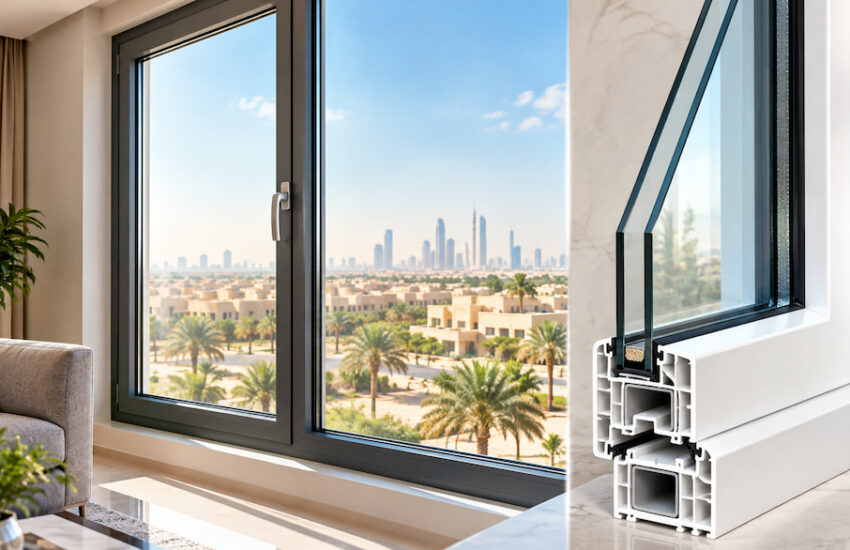
Choosing the right glazing is just as important as selecting the window frame. In Saudi Arabia, where summer temperatures can become extreme and air conditioning plays a major role in residential comfort, the glass specification can significantly influence how a window performs.
Double glazed uPVC windows combine an insulated frame with two panes of glass separated by a sealed cavity. This construction can help reduce heat transfer, improve acoustic comfort, and create a more comfortable indoor environment when compared with basic single glazed windows.
For homeowners planning villas in Riyadh, Jeddah, Dammam, Khobar, and other Saudi cities, understanding double glazing can help them make better decisions about window performance, long term value, and suitability for local conditions.
What Are Double Glazed uPVC Windows?
A double glazed window contains two panes of glass separated by a spacer and an enclosed cavity. The cavity typically contains air or, in some systems, an insulating gas such as argon. The two panes form an insulated glass unit that fits within the window frame.
When this glass unit is installed in a uPVC frame, the system combines the thermal insulation of the frame with the insulating properties of the glazing. The uPVC profile generally has low thermal conductivity, while the cavity between the glass panes helps slow heat transfer through the glazed area.
However, the performance of the finished window depends on the complete system. The glass thickness, cavity width, coatings, spacer design, frame construction, seals, and installation all influence the final result. This is why homeowners should evaluate the full window specification instead of assuming that every double glazed uPVC window provides the same level of insulation.
Why Double Glazing Matters in Saudi Arabia ?
Saudi homes often rely on air conditioning for extended periods, particularly during the summer. When exterior heat passes through windows, indoor temperatures can rise and increase the cooling load.
Double glazing helps reduce heat transfer through the glass compared with conventional single glazing. This can support a more stable indoor environment, especially when the windows are combined with an insulated frame, effective seals, and appropriate shading.
The difference can be particularly relevant in villas with large windows or extensive glazed façades. A large window can admit substantial solar energy if the glass is not selected appropriately, regardless of how well insulated the frame may be. For this reason, double glazing should be considered as part of the property’s overall thermal design rather than a standalone solution.
How Double Glazing Helps Control Heat ?
Heat moves through windows in several ways. It can transfer through the glass and frame, while direct sunlight can introduce solar energy into the interior. Poorly sealed joints can also allow unwanted air movement.
Double glazing creates an insulating cavity between two panes, reducing heat transfer through the glass. When the unit also uses suitable Low E or solar control glass, it can provide additional control over heat entering the building.
For a villa in Riyadh, for example, a large west facing window may receive intense afternoon sunlight. A suitable glazing specification, combined with an insulated uPVC frame and external shading, can help reduce unwanted solar heat gain.
The most effective configuration depends on the orientation, size, and exposure of each window. A shaded opening and a large window exposed to direct sunlight may require different glazing specifications.
Double Glazing vs Single Glazing ?
Single glazing uses one pane of glass, making it a simpler and often less expensive option. However, it generally provides less thermal and acoustic insulation than a properly specified double glazed unit.
Double glazing introduces a cavity between two panes, which reduces heat transfer and can improve sound insulation. The improvement depends on the glass configuration, cavity design, and overall window construction. For Saudi villas where indoor cooling and comfort are priorities, double glazing is worth considering, particularly for bedrooms, living rooms, and large exterior windows.
Nevertheless, double glazing alone does not guarantee low energy consumption. Roof insulation, wall construction, air leakage, window orientation, shading, and air conditioning efficiency also influence the property’s overall performance.
What Is Low E Glass, and Is It Useful in Saudi Arabia?
Low emissivity glass, commonly called Low E glass, has a specialised coating that helps control heat transfer through the glazing. Depending on the product, the coating can reduce the movement of radiant heat while allowing natural light to enter. In Saudi Arabia, Low E glass can be particularly useful when the goal is to improve thermal performance without unnecessarily reducing daylight.
However, Low E products are not all identical. Some specifications prioritise reducing heat transfer, while solar control products focus more directly on limiting solar heat gain. The appropriate choice depends on the building’s location, orientation, window size, and performance requirements.
Homeowners should ask their window supplier for the proposed glass specification and supporting performance data rather than relying on the Low E label alone.
Solar Control Glass for Saudi Villas ?
Solar control glazing is designed to reduce the amount of solar energy entering a building. It can be particularly useful for windows exposed to strong sunlight, where excessive solar heat gain may make indoor spaces uncomfortable.
For example, a villa with large west facing windows in Riyadh may benefit from solar control glazing because these openings can receive intense afternoon sunlight. In Jeddah, Dammam, and Khobar, solar exposure also remains an important consideration, even though coastal humidity creates additional environmental challenges.
The objective is to balance solar control with natural light, external views, and the appearance of the façade. Depending on the selected product, solar control glass may alter the visible colour or reflectivity of the window, so samples should be reviewed before the final specification is approved.
Let’s Talk — Get Your Quote Fast
Need pricing, drawings, or quick product guidance? Contact Maskni Alzaki and we’ll respond with a tailored quotation and technical support.
Choosing the Right Glass for Different Saudi Cities ?
Although many parts of Saudi Arabia experience high summer temperatures, local conditions still influence window selection.
In Riyadh, homeowners should pay particular attention to solar exposure and thermal insulation. Large windows facing direct afternoon sunlight may benefit from an appropriate solar control specification, especially when external shading is limited.
In Jeddah, humidity and coastal exposure should be considered alongside heat gain. The glazing remains important, but homeowners should also check that hardware, reinforcement, seals, and installation materials are suitable for the property’s environment.
In Dammam and Khobar, the combination of heat and coastal conditions makes it important to evaluate the entire window system. The right glass should reflect the façade’s exposure, while the frame and associated components should be suitable for long term exterior use. These differences show why a single glazing specification should not automatically be applied to every window in every project.
Can Double Glazing Reduce Outside Noise?
Double glazing can improve acoustic insulation compared with basic single glazing, making it useful for villas near busy roads, commercial districts, or other sources of outdoor noise.
However, sound reduction depends on more than the number of glass panes. Glass thickness, differences between the two panes, cavity width, laminated glass, frame construction, and air sealing can all influence acoustic performance.
For properties close to a busy road in Riyadh or a high traffic area in Jeddah, homeowners should discuss the expected noise levels with the supplier before selecting the glazing. If noise reduction is a major requirement, ask for acoustic performance information for the complete window system rather than relying on general claims about double glazing.
Does Double Glazing Make uPVC Windows More Secure?
Double glazing is primarily selected for thermal and acoustic performance, not as a guarantee of security. Two panes of ordinary glass do not automatically make a window resistant to forced entry. For ground floor windows and other accessible openings, homeowners may consider suitable laminated security glazing, quality locking hardware, and appropriately reinforced frames.
The complete system should be evaluated according to the property’s security requirements. Glass type, locking points, frame strength, installation, and anchoring all contribute to the final result. A window supplier should explain the differences between standard double glazing, safety glazing, and security glazing so that the correct product is specified.
How Much Do Double Glazed uPVC Windows Cost in Saudi Arabia?
The cost depends on the dimensions, profile system, glass specification, opening style, hardware, finish, reinforcement, and installation requirements.
A standard double glazed unit will generally have a different price from a system using specialised Low E, solar control, laminated, or acoustic glass. Large openings may also require stronger profiles and hardware, which can increase the overall cost.
For this reason, homeowners should compare detailed quotations rather than relying on a general price per window. Each quotation should clearly state the glass specification, frame system, hardware, installation scope, and warranty terms. The cheapest quotation may not provide equivalent thermal performance or durability, while the most expensive option may include features that a particular opening does not require.
What Should You Check Before Buying?
Before approving a double glazed uPVC window specification, confirm that the supplier identifies the glass build up, including pane thicknesses, cavity width, coatings, and any insulating gas used. Ask for relevant thermal and acoustic performance data where these factors influence the project.
The frame should also be suitable for the window dimensions and glazing weight. Check the profile system, reinforcement requirements, seals, hardware, drainage design, and installation method.
For a new villa, coordinate the glazing selection with the architect or contractor before finalising the window openings. This helps ensure that the proposed system suits the façade design and installation details. A clear specification reduces misunderstandings and makes it easier to compare suppliers on a like for like basis.
Are Double Glazed uPVC Windows Worth It?
For many Saudi homes, double glazed uPVC windows offer a practical combination of thermal insulation, acoustic comfort, and relatively low maintenance. Their value is especially relevant where homeowners want to improve the building envelope and manage unwanted heat transfer.
However, the benefits depend on selecting the right product. Standard double glazing may be adequate for some openings, while other locations may justify Low E glass, solar control coatings, or specialised acoustic glazing.
The best solution is not necessarily the most expensive glass available. It is the specification that meets the performance requirements of the property without unnecessary cost.
Final Thoughts
Double glazed uPVC windows can be a strong choice for villas and residential buildings across Saudi Arabia. The combination of an insulated uPVC frame and a double glazed unit can help reduce heat transfer and improve indoor comfort when the system is correctly specified and installed.
For properties in Riyadh, solar exposure and cooling requirements should guide the glazing decision. In Jeddah, Dammam, and Khobar, homeowners should consider these factors alongside coastal exposure and the suitability of the complete window system.
Before making a purchase, compare the glass specification, frame construction, seals, hardware, installation, and documented performance. This approach helps homeowners choose windows that suit the property rather than paying for a feature without understanding its practical value.

