

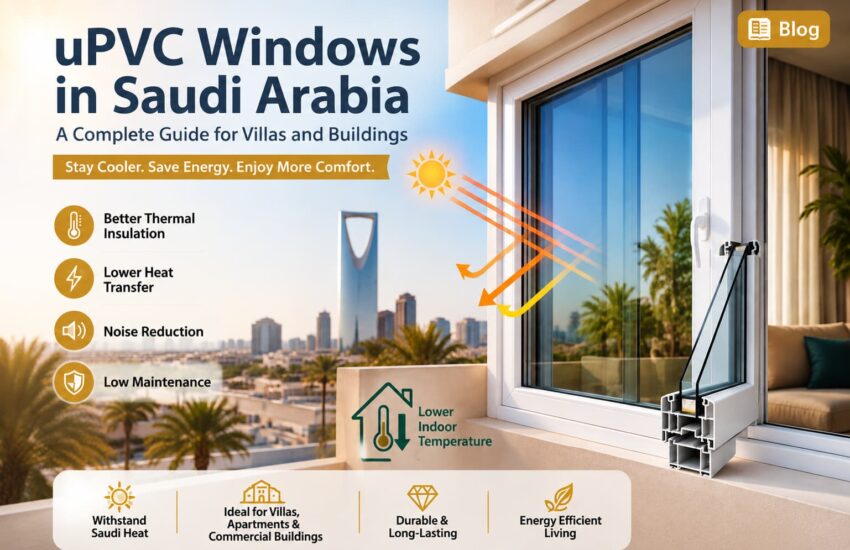
Choosing the right windows in Saudi Arabia requires more than comparing designs and prices. Windows influence indoor temperature, air conditioning efficiency, noise levels, natural light, ventilation, and the overall comfort of a building.
For villas, apartments, offices, and commercial properties across the Kingdom, uPVC windows have become an increasingly practical alternative to conventional window systems. Their combination of thermal insulation, weather resistance, low maintenance, and design flexibility makes them particularly relevant to the Saudi climate.
However, not every uPVC window system delivers the same performance. The quality of the profile, glazing, seals, hardware, installation, and overall construction determines how well the window performs after years of exposure to heat, dust, sunlight, and humidity.
This guide explains what homeowners, architects, consultants, and property developers should know before choosing uPVC windows in Saudi Arabia.
What Are uPVC Windows?
uPVC stands for unplasticized polyvinyl chloride, a rigid form of PVC commonly used to manufacture window and door profiles.
Unlike traditional PVC, uPVC does not rely on plasticizers to remain flexible. Manufacturers use reinforced multi-chamber profiles to create rigid frames capable of supporting glazing while providing thermal and acoustic insulation.
The frame contains internal chambers that help slow heat transfer between the exterior and interior. Manufacturers can also reinforce the profile with galvanized steel where additional structural strength is required.
This construction makes uPVC different from simple plastic window products. A properly engineered uPVC window is a complete system consisting of the profile, reinforcement, glazing, seals, hardware, drainage, and installation.
Why uPVC Windows Are Suitable for Saudi Arabia
Saudi Arabia presents demanding conditions for exterior building materials. Summer temperatures can become extremely high, while direct solar exposure places continuous stress on window frames and glass.
This makes thermal performance particularly important.
A poorly insulated window can become a significant source of heat gain. When exterior heat enters through the frame and glazing, the air conditioning system has to work harder to maintain the desired indoor temperature.
uPVC addresses part of this problem through its naturally low thermal conductivity and multi-chamber profile construction. The frame creates a thermal barrier between the indoor and outdoor environments, helping reduce heat transfer.
This advantage becomes especially relevant in villas with large window areas or rooms that receive direct afternoon sunlight.
From a practical perspective, the benefit is not simply that the window frame feels cooler. The real value comes from creating a more stable indoor environment and reducing unnecessary thermal load on the building.
How uPVC Windows Help With Saudi Heat
The performance of a window depends on the entire system rather than the frame alone.
A high-quality uPVC profile combined with suitable glazing and effective weather seals can significantly improve the building envelope. The profile limits heat conduction through the frame, while the glass controls solar radiation and heat transfer through the glazed area.
For properties in Riyadh, where intense summer heat is a major consideration, selecting the right glazing specification is just as important as selecting the uPVC profile.
For coastal cities such as Jeddah, Dammam, and Khobar, humidity and salt exposure introduce another consideration. A well-designed uPVC system does not rust or corrode like untreated metal, making it attractive for buildings exposed to humid coastal conditions.
uPVC Windows and Energy Efficiency
Air conditioning represents a major part of energy consumption in Saudi buildings. Improving the thermal performance of the building envelope can therefore contribute to more efficient cooling.
Windows are an important part of that envelope.
When a window has poor insulation, heat can enter through the frame, glass, gaps, and poorly sealed joints. The cooling system then compensates for this additional heat gain.
uPVC windows reduce heat transfer through the frame, while double glazing and suitable glass coatings can further improve the overall thermal performance.
For new villas, this means window selection should take place during the design stage rather than being treated as a finishing decision. The orientation of the building, window size, glass specification, shading, and frame system all influence the final result.
Double Glazing Makes a Significant Difference
The frame is only one part of a window.
The glazing area often represents most of the visible surface, which means the glass specification has a major influence on thermal performance.
Single glazing provides limited insulation compared with modern double-glazed systems. Double glazing creates an insulating cavity between two glass panes, reducing heat transfer through the window.
For Saudi villas, double glazing can become particularly valuable on large openings and façades exposed to strong sunlight.
Low-emissivity glass can provide another layer of thermal control by reducing the amount of heat transferred through the glazing. Depending on the property’s orientation and design, tinted or solar-control glass may also help manage glare and solar heat gain.
The right combination should be selected according to the project’s location, façade orientation, window size, and energy requirements.
uPVC Windows for Saudi Villas
Villa architecture in Saudi Arabia increasingly incorporates larger windows to bring natural light into living spaces and create stronger connections between indoor and outdoor areas.
Large openings, however, increase the importance of window performance.
For a villa, the window system should complement the architecture without creating unnecessary heat gain or compromising comfort. uPVC systems can accommodate several opening configurations, including fixed, casement, tilt-and-turn, and sliding designs.
Fixed uPVC windows work particularly well where ventilation is not required. They provide a large glazed area with a simple, highly sealed frame.
Casement windows open outward and can provide effective ventilation when the weather permits. Tilt-and-turn systems provide additional flexibility by allowing controlled ventilation while maintaining security.
The best configuration depends on how each room is used and how the façade interacts with the local climate.
Let’s Talk — Get Your Quote Fast
Need pricing, drawings, or quick product guidance? Contact Maskni Alzaki and we’ll respond with a tailored quotation and technical support.
uPVC Casement Windows
Casement windows remain a practical choice for bedrooms, living rooms, offices, and other spaces where controlled ventilation is important.
The sash closes against the frame and compression seals, creating a relatively tight barrier when the window is shut. This can help limit unwanted air infiltration and dust entry. In Saudi Arabia, this is particularly useful during dusty conditions and periods when outdoor air quality is less favorable.
Casement windows can also provide a larger unobstructed opening compared with some sliding configurations, making them useful where natural ventilation is part of the building design.
uPVC Windows vs Aluminum Windows
Aluminum remains widely used in Saudi construction because it is strong, lightweight, and highly adaptable to modern architectural designs.
However, standard aluminum conducts heat more readily than uPVC.
This difference becomes important in Saudi conditions. Without thermal break technology, an aluminum frame can transfer considerable heat from the exterior to the interior. Modern thermal break aluminum systems address this limitation by introducing an insulating barrier within the profile. As a result, premium aluminum systems can deliver excellent thermal performance. The comparison therefore depends on the specification.
A basic aluminum window and a high-quality uPVC window will perform differently from a premium thermal break aluminum system. Homeowners should compare complete window systems rather than assuming that one material automatically performs better in every application.
For properties where thermal insulation and low maintenance are priorities, uPVC provides a compelling solution. Where very slim profiles, large glazed openings, or specific architectural requirements dominate, thermally broken aluminum may provide an advantage.
How uPVC Performs in Dusty Conditions
Dust is an unavoidable consideration for many Saudi properties. Poorly sealed windows allow fine dust to enter around the frame, particularly when external wind pressure increases. This creates additional cleaning requirements and can affect indoor comfort. Quality uPVC windows use compression seals and carefully engineered frame joints to create a tighter closure.
However, even the best window cannot compensate for poor installation. Gaps between the frame and wall opening can undermine the performance of the entire system. For this reason, professional installation should be considered part of the window specification rather than an optional service.
Maintenance Requirements
One of the strongest advantages of uPVC windows is their relatively low maintenance requirement. Unlike timber, uPVC does not require regular painting or varnishing to maintain its basic weather resistance. The surface can generally be cleaned using mild soap and water.
Hardware and moving components still require periodic inspection. Seals should also be checked to ensure they remain flexible and properly positioned. In dusty regions, keeping drainage channels clear is important. Window systems are designed to manage small amounts of water through dedicated drainage paths, and blocked channels can affect their performance. Simple preventive maintenance can help preserve smooth operation and sealing performance for many years.
How Long Do uPVC Windows Last in Saudi Arabia?
The lifespan of a uPVC window depends on the quality of the system, installation, exposure conditions, hardware, glazing, and maintenance. A properly manufactured and installed system can provide long-term service in residential and commercial applications.
The biggest concern is not the uPVC material itself but the quality of the complete product. Low-grade profiles, poor reinforcement, weak hardware, inferior seals, and inadequate installation can shorten service life.
For a significant villa investment, homeowners should therefore ask about profile specifications, reinforcement, glazing, hardware, warranties, and installation standards rather than selecting a window based only on appearance.
Choosing uPVC Windows for Riyadh
Riyadh presents one of the strongest use cases for thermally efficient windows because of its hot and dry climate and intense solar exposure. Window orientation matters significantly. West-facing windows can experience particularly strong afternoon solar exposure, making glazing and shading decisions important.
For these façades, homeowners should consider the combination of a well-insulated uPVC profile with suitable solar-control glazing and effective external shading where appropriate. Large villa windows should also be evaluated structurally to ensure the selected profile and reinforcement can support the required glazing dimensions.
Choosing uPVC Windows for Jeddah and Coastal Areas
Jeddah and other coastal areas introduce higher humidity and salt exposure into the equation. uPVC provides a natural advantage because the frame itself does not rust. This makes it an attractive alternative where corrosion resistance is an important consideration.
However, hardware, reinforcement, fixings, and other components still need appropriate specifications for the environment. For coastal villas, homeowners should therefore evaluate the complete window system rather than considering only the frame material.
What Should You Check Before Buying uPVC Windows?
A professional supplier should be able to explain exactly what you are purchasing.
Ask about the profile system, number of chambers, reinforcement, glazing specification, seal quality, hardware, drainage design, and installation method. The supplier should also explain how the proposed system suits the property’s location and exposure.
For a new villa, it is particularly useful to review the window specifications before finalizing the façade openings. This allows the architect, contractor, and window supplier to coordinate dimensions and installation requirements properly.
The cheapest quotation does not necessarily provide the lowest long-term cost. A window that requires early replacement, frequent adjustment, or additional insulation work can become more expensive than a properly specified system from the beginning.
Are uPVC Windows a Good Investment for Saudi Properties?
For many Saudi residential projects, the answer is yes. uPVC combines thermal insulation, weather resistance, low maintenance, acoustic benefits, and design flexibility in a single window system. These characteristics align well with the requirements of modern villas and buildings across the Kingdom.
However, the material alone does not guarantee performance. The profile, glazing, hardware, seals, reinforcement, manufacturing quality, and installation must work together. When these elements are properly specified, uPVC windows can provide a durable and comfortable solution for Saudi homes.
Final Thoughts
Choosing windows for a Saudi property requires a balance between aesthetics and performance.
uPVC windows offer a strong combination of thermal insulation, low maintenance, weather resistance, and long-term practicality. They are particularly suitable for homeowners looking to improve comfort and manage heat transfer without compromising the appearance of their villa.
The most important decision is not simply choosing uPVC. It is choosing the right uPVC system for the Saudi climate and having it installed correctly. For villas and buildings across Riyadh, Jeddah, Dammam, Khobar, and other Saudi markets, a properly specified uPVC window can become an important part of a more comfortable, efficient, and durable building envelope.

