

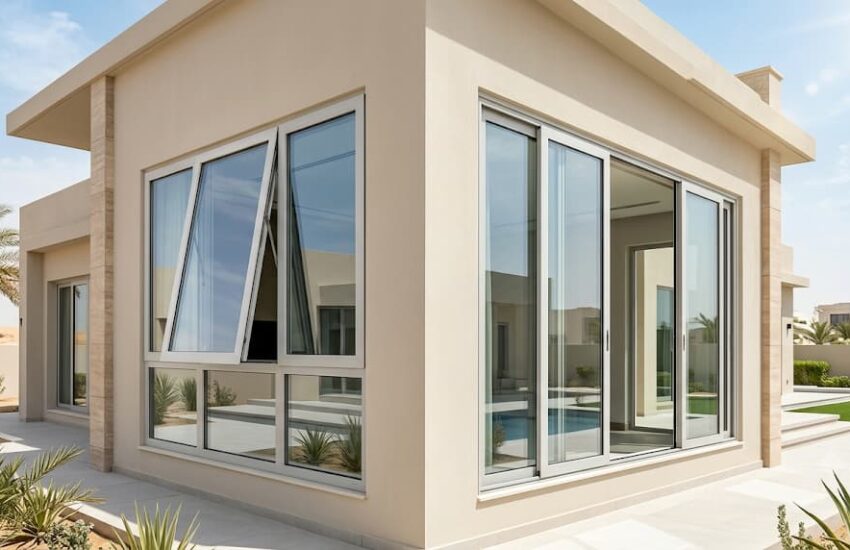
Choosing the right window style for a villa in Saudi Arabia involves more than deciding how the window should look. The opening mechanism affects ventilation, sealing, thermal performance, cleaning, usability, and even how much usable space remains around the window. For homeowners building or renovating a villa, these details become especially important when windows are exposed to intense heat, dust, and frequent air conditioning.
Two of the most practical options are uPVC casement windows and uPVC sliding windows. Both can work well in Saudi homes, but they are designed differently and suit different requirements. A casement window opens using hinges, while a sliding window operates by moving one sash horizontally along a track. Understanding this difference helps homeowners select the right system for each room instead of using the same window type throughout the property.
How uPVC Casement Windows Work
A uPVC casement window uses hinges to open the sash outward, usually from one side. When the window closes, the sash presses against the seals around the frame, creating a tight closure. This design makes casement windows particularly useful where insulation and controlled ventilation are important.
In a Saudi villa, the tight closing action can help reduce unwanted air movement and limit dust entering through gaps. When the weather is suitable for natural ventilation, opening the sash also provides a relatively wide ventilation area. This makes casement windows practical for bedrooms, living rooms, kitchens, and other spaces where homeowners want both ventilation and good sealing when the window remains closed.
How uPVC Sliding Windows Work
Sliding uPVC windows use horizontal movement rather than hinges. One or more sashes move along a dedicated track, allowing the window to open without projecting outward into the surrounding area.
This makes sliding windows useful where exterior space is limited or where homeowners want a simple opening mechanism. They can also work well for balconies, patios, bedrooms, and areas where furniture or landscaping sits close to the window. Sliding windows are particularly attractive for modern villas because they provide a clean appearance and can create wide openings without requiring the sash to swing into an occupied area.
Thermal Performance in Saudi Arabia
Thermal insulation is one of the most important considerations when selecting windows for a Saudi villa. During summer, exterior heat can significantly affect indoor comfort, particularly when large windows face direct sunlight.
Casement windows generally provide strong sealing because the sash closes against compression seals around the frame. When correctly manufactured and installed, this configuration can reduce unwanted air leakage and support good thermal performance.
Sliding windows can also provide effective insulation, but their sealing arrangement is different. The moving sashes operate along tracks rather than closing against the frame in the same way as a casement system. The quality of the seals, frame design, track system, glazing, and installation therefore becomes particularly important. For a villa where maximum air tightness is a priority, the complete window specification should be examined rather than choosing a style based only on appearance.
Which Window Is Better for Dusty Conditions?
Dust is a practical concern for many Saudi properties. Fine dust can enter through small gaps around poorly sealed windows, increasing cleaning requirements and affecting indoor comfort. Casement windows have an advantage when closed because the sash presses firmly against the surrounding seals. A properly adjusted system can create a tight barrier between the interior and exterior.
Sliding windows can also provide good protection when manufactured with quality seals and correctly installed. However, the sliding track requires regular cleaning because dust and debris can accumulate in the running channel over time.
For villas in dusty inland areas such as Riyadh, regular maintenance of either system remains important. The window should close properly, seals should remain in good condition, and drainage and track areas should be kept clear.
Casement: Maximum airflow, airtight dust & heat sealing, and strong multi-point security.
Sliding: Perfect for compact spaces, easy operation, and wide panoramic views.
Ventilation: Casement vs Sliding
Ventilation requirements can vary from room to room. Casement windows allow the sash to open outward and can provide a substantial opening for fresh air. Their opening angle can also be adjusted to control the amount of airflow entering the room.
Sliding windows normally open by moving one sash behind or alongside another. This means only part of the overall window opening is available for ventilation. For rooms where natural ventilation is a major priority, a casement configuration can therefore provide greater flexibility. Sliding windows remain practical where homeowners prefer simple horizontal operation or where an outward-opening sash would interfere with balconies, walkways, curtains, or other features.
Which Is Better for Large Villa Windows?
Modern Saudi villas often include large windows to increase natural light and create a stronger visual connection with gardens, terraces, and outdoor areas. Sliding systems are particularly useful for larger openings where homeowners want convenient horizontal movement. They can also be incorporated into wider glazed areas without requiring the sash to swing outward.
Casement windows can accommodate substantial glazing as well, but larger opening sections require appropriate profile selection, reinforcement, hardware, and engineering. The size and weight of the glass should always be considered before selecting the opening configuration. For very large openings, homeowners may also need to consider dedicated sliding door systems rather than treating the opening as a standard window.
Space Around the Window
The available space around a window can influence the most practical choice. A casement sash requires clearance when it opens. If a walkway, external wall, plant, balcony railing, or other obstruction sits directly outside the window, outward opening may not be practical. Sliding windows do not require this external clearance. The sash remains within the window system as it moves along its track.
This makes sliding windows particularly useful in areas where space is restricted. Inside the villa, the same consideration applies to furniture and curtains. A casement window can require sufficient clearance for its operating area, while a sliding window generally does not interfere with furniture positioned close to the opening.
Security Considerations
Security depends on the complete window system, including the frame, glass, locks, hardware, reinforcement, and installation. A well-designed casement window can use multi-point locking hardware that secures the sash at several locations around the frame. This can provide a strong closed position and improve resistance to forced entry.
Sliding windows can also incorporate secure locking systems, but homeowners should pay close attention to the quality of the locking mechanism and the way the moving sash is secured. For ground-floor villa windows, security glazing may also be worth considering. Laminated glass can provide additional resistance compared with ordinary glass and can help retain broken glass within the interlayer if the pane is damaged.
Acoustic Performance
Noise can become a concern for villas located near major roads, schools, commercial areas, or busy neighbourhoods. The frame design contributes to acoustic performance, but the glass and sealing system often have an even greater influence.
Casement windows can provide strong acoustic performance when the sash closes tightly against quality seals. Sliding windows can also provide effective noise reduction when the system uses suitable glazing and well-designed seals.
If reducing outside noise is an important requirement, homeowners should discuss the glazing specification with the supplier rather than choosing a window based solely on the frame material.
Let’s Talk — Get Your Quote Fast
Need pricing, drawings, or quick product guidance? Contact Maskni Alzaki and we’ll respond with a tailored quotation and technical support.
Double Glazing for Both Window Types
Both casement and sliding uPVC windows can be specified with double glazing. Double glazing uses two panes of glass separated by an insulating cavity. It can improve thermal and acoustic performance compared with conventional single glazing. For Saudi villas, the choice of glass should reflect the property’s location and exposure. A west-facing room in Riyadh may require different solar-control considerations from a shaded opening in another part of the property.
Low-E and solar-control glazing can also be considered where reducing solar heat gain is a priority. The important point is that uPVC profile selection and glass selection should be treated as one system. Choosing a premium frame while using unsuitable glazing can limit the overall performance of the window.
Maintenance Requirements
Both window types require routine maintenance, but the areas requiring attention differ. Casement windows should be checked periodically for smooth operation, seal condition, hinge alignment, and locking hardware. If the sash becomes difficult to close, adjustment may be necessary to maintain proper compression against the seals.
Sliding windows require particular attention to the tracks. Dust, sand, and debris can accumulate in the running channels, especially in dry and dusty regions. Keeping these tracks clean helps the sash move smoothly and reduces unnecessary wear on rollers and hardware. Neither system should require complicated maintenance when properly installed and maintained.
uPVC Casement Windows for Riyadh Villas
Casement windows can be a strong option for Riyadh villas where thermal insulation, sealing, and ventilation are important. The hot and dry climate makes it useful to maintain a well-sealed building envelope during periods when air conditioning is operating continuously. The compression-seal design of casement windows can support this requirement when the system has been correctly manufactured and installed.
Homeowners should also consider solar exposure. A well-insulated frame will not prevent excessive heat gain through poorly selected glass, so glazing and external shading should be evaluated alongside the window frame.
uPVC Sliding Windows for Jeddah and Coastal Areas
Sliding windows can be practical in Jeddah and other coastal cities where homeowners often use larger openings and value easy operation. Because sliding windows do not require an outward swing, they can work well around balconies, terraces, and compact external spaces.
Coastal properties should pay attention to hardware quality and corrosion resistance. Although uPVC itself does not rust, the rollers, locks, fasteners, reinforcement, and other components still need appropriate specifications for humid environments. Regular cleaning also becomes important because coastal moisture combined with dust can affect tracks and hardware over time.
Which One Should You Choose for Your Villa?
There is no single window style that suits every room. A homeowner may choose casement windows for bedrooms and living areas where strong sealing and ventilation are priorities, while selecting sliding windows for locations where space, access, or large horizontal openings make sliding operation more practical.
This mixed approach often makes more sense than installing one configuration throughout the entire villa. The architectural design should also influence the decision. A contemporary villa with large glazed openings may require a combination of fixed, sliding, and opening windows to achieve the desired appearance and functionality.
What About Cost?
The final price of a uPVC window depends on considerably more than whether it is casement or sliding. Profile quality, dimensions, glazing, hardware, reinforcement, colour or finish, opening configuration, quantity, installation requirements, and project location can all influence the quotation.
Sliding windows may appear straightforward, but large systems require suitable rollers, tracks, reinforcement, and hardware. Casement windows require reliable hinges, locking mechanisms, and sealing components. For this reason, homeowners should compare complete specifications rather than comparing two prices without checking what each quotation includes.
Casement or Sliding: A Practical Comparison
| Feature | uPVC Casement Windows | uPVC Sliding Windows |
| Opening method | Hinged outward | Horizontal sliding |
| Air sealing | Generally strong when properly installed | Depends heavily on system design and seals |
| Ventilation | Wide opening | Partial opening |
| External clearance | Required | Not normally required |
| Large openings | Suitable with correct engineering | Particularly practical |
| Dust protection | Strong when properly sealed | Good with quality seals and maintenance |
| Space efficiency | Requires opening clearance | Excellent where space is limited |
| Security | Strong with quality multi-point hardware | Strong with appropriate locking system |
| Acoustic performance | Strong with suitable glazing | Strong with suitable glazing |
| Maintenance | Hinges, seals and hardware | Tracks, rollers, seals and hardware |
Final Thoughts
Both uPVC casement and sliding windows can perform well in Saudi villas when the complete system is correctly specified and professionally installed.
Casement windows are particularly useful where homeowners prioritise sealing, ventilation, and thermal performance. Sliding windows offer practical advantages where space is limited, wide openings are required, or a simple horizontal operating system better suits the architecture.
The Saudi climate makes the quality of the profile, glazing, seals, hardware, and installation especially important. Instead of choosing a window purely because it looks attractive or has a lower initial price, homeowners should consider how the system will perform in the specific location and room where it will be installed.
For a new villa, the most effective approach is often to use different window configurations according to the function of each space. This allows the design, ventilation, thermal performance, and usability of the property to work together rather than forcing one window style to meet every requirement.

