

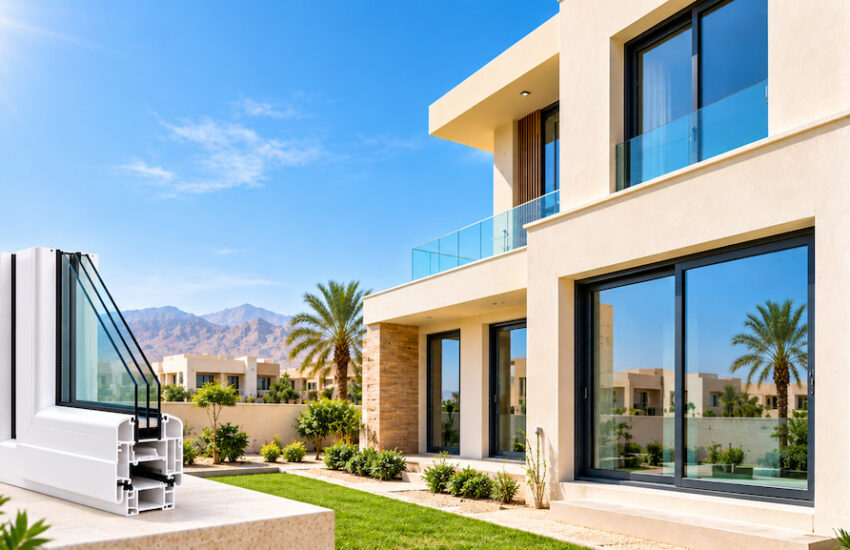
Choosing uPVC windows for a villa in Saudi Arabia involves more than selecting a frame colour or deciding between sliding and casement designs. The right window system must suit the building’s architecture, room layout, exposure to sunlight, ventilation requirements, privacy needs and long-term maintenance expectations. Profile quality, glazing, hardware, sealing and installation all influence how the finished window performs.
For homeowners, architects, contractors and property developers, making these decisions early can help avoid unsuitable specifications, unexpected costs and performance problems after installation. A window that works well in a shaded bedroom may not be the best choice for a large living room facing the afternoon sun. Likewise, a villa near the coast may need different hardware considerations from a property in an inland, dust-prone location. This guide explains how to evaluate uPVC windows for Saudi villas, from selecting the opening style to checking technical specifications and preparing for installation.
Why Window Selection Matters in Saudi Arabia ?
Saudi Arabia’s climate places particular demands on building openings. In many areas, windows receive intense sunlight for extended periods, while fine dust can accumulate around frames and moving components. Coastal locations such as Jeddah, Dammam and Khobar also experience humid conditions and airborne salt that may affect exposed metal hardware.
The window’s performance depends on the complete assembly rather than the frame material alone. A well-designed uPVC profile can provide a useful foundation, but glazing type, glass configuration, gaskets, locking points, reinforcement where required and installation quality also matter. Poorly sealed joints or incorrectly adjusted sashes can undermine the benefits of an otherwise suitable product.
Before comparing suppliers, identify the primary purpose of each window. Is the priority reducing unwanted heat gain, improving privacy, increasing ventilation, limiting external noise, supporting security or creating a wider outdoor view? Several objectives may apply to the same room, but defining the priorities helps you compare products on relevant criteria instead of relying on general marketing claims.
1. Select the Right uPVC Window Style for Each Room
The opening style affects ventilation, usable space, cleaning access and the overall appearance of a villa. The most suitable design depends on the room’s function and the available space around the opening.
Sliding uPVC Windows
Sliding windows open horizontally, with one sash moving alongside another. They are useful where outward-opening sashes could interfere with walkways, balconies, furniture or external shading. Their straightforward operation can also suit frequently used openings in bedrooms and living areas.
However, sliding windows depend on correctly designed tracks, rollers, seals and drainage. Dust and sand can accumulate in the tracks, particularly in exposed locations, so regular cleaning is important. When comparing sliding systems, ask about the sealing arrangement, roller quality, drainage design and ease of maintenance rather than evaluating the frame appearance alone.
Casement uPVC Windows
Casement windows open on hinges, usually outward or inward depending on the design. They can provide a generous clear opening for ventilation and may achieve effective perimeter compression when the sash, seals and locking mechanism are properly designed and adjusted.
The opening direction must be considered carefully. An outward-opening window may conflict with an external walkway, shading device or restricted boundary. An inward-opening design requires sufficient interior clearance for curtains, furniture and movement. In exposed locations, the window and hardware should also be suitable for the expected wind conditions.
Tilt-and-Turn uPVC Windows
Tilt-and-turn windows offer two operating positions in one system: a tilted opening for limited ventilation and a wider opening for access and cleaning, depending on the design. This flexibility can be valuable in selected bedrooms and other rooms where controlled ventilation is desirable.
These systems use more complex hardware than basic sliding windows, so component quality, correct adjustment and maintenance support deserve attention. Before specifying them, confirm that the operating method, opening direction and safety provisions suit the room and the household’s requirements.
2. Choose Glazing Based on Heat, Sunlight and Comfort
Glazing is one of the most important decisions when selecting windows for a Saudi villa. The glass affects solar heat gain, heat transfer, visible light, external noise and the overall performance of the window assembly.
Double glazing consists of two panes separated by a sealed cavity. Depending on the glass types, cavity configuration and overall design, it can improve thermal and acoustic performance compared with basic single glazing. However, double glazing alone does not guarantee a particular level of insulation or noise reduction.
For windows exposed to strong sunlight, consider whether solar-control glass or a suitable Low-E coating would be beneficial. Low-E coatings are designed to manage heat transfer by affecting the movement of infrared energy, while solar-control glass can reduce the amount of solar energy entering the building. The correct specification depends on orientation, shading, daylight requirements, climate and the building’s overall design.
For larger villa openings, a specification based only on glass thickness is insufficient. Glass safety requirements, pane dimensions, wind loading, support conditions and the applicable building requirements must also be considered by the responsible designer or supplier.
3. Evaluate uPVC Profile Quality and Construction
The profile forms the main frame and sash structure. Its design influences rigidity, the available glazing configuration, sealing geometry, hardware compatibility and the finished appearance.
Do not judge profile quality by the external width or the number of internal chambers alone. Chamber arrangements vary between manufacturers, and a higher chamber count does not automatically mean better thermal performance or structural strength. The complete profile design, material formulation, reinforcement requirements, fabrication quality and tested performance are more meaningful indicators.
Ask the supplier for the profile system’s technical documentation and details of how the windows will be fabricated for your project. Large openings may require different structural considerations from smaller windows, particularly where wind loads, sash dimensions and glass weight are significant.
Also check whether the profile and hardware are compatible with the selected glazing and opening style. A complete system should be designed to work together, rather than assembled from components whose performance has not been properly evaluated.
4. Check Seals, Hardware and Locking Mechanisms
Seals and hardware often receive less attention than the frame and glass, yet they have a direct influence on everyday operation and weather resistance.
Inspect the specification for gaskets, hinges, handles, rollers where applicable, locking points and drainage arrangements. Good sealing depends on compatible components, correct fabrication, appropriate compression and accurate installation. The number of locking points alone does not establish a window’s security or resistance to air and water penetration.
For villas in dusty inland areas, ask how the design manages dust entry around the closed sash and how accessible the tracks and drainage channels are for cleaning. For coastal homes in Jeddah, Dammam or Khobar, ask about the corrosion resistance and maintenance requirements of exposed metal hardware.
If security is a major concern, discuss the complete configuration, including the locking mechanism, frame and sash strength, glazing type, installation and any additional security requirements. Do not assume that a uPVC frame by itself makes a window burglar-resistant.
5. Consider Window Orientation and Room Function
A villa’s orientation and room layout influence the appropriate window specification. Large openings facing strong afternoon sunlight may require more attention to solar heat gain and shading. Bedrooms may prioritize privacy, comfortable temperatures and external noise control, while kitchens and bathrooms may have different ventilation, moisture and privacy requirements.
For living rooms with wide views, larger glazed areas can improve daylight and the sense of openness, but they also increase the importance of appropriate glass selection, structural design and solar control. In smaller rooms, the opening mechanism should be compatible with furniture placement and available clearance.
Before finalizing the design, review each window on the architectural drawings. Record the approximate dimensions, opening type, orientation, required privacy level and any shading or access constraints. This simple schedule helps the supplier provide a more accurate, room-specific quotation and reduces the risk of choosing a standard configuration that does not suit the actual building.
6. Account for Dust, Heat and Coastal Conditions
In Riyadh and other inland areas, fine dust can build up in sliding tracks, hinges and locking mechanisms. Windows with accessible tracks and straightforward cleaning requirements may be easier to maintain. Effective seals and correct sash adjustment are important, although no window should be assumed to prevent all dust under every condition.
In coastal areas, the frame and the metal hardware need to be considered separately. uPVC itself does not rust like ordinary steel, but hinges, screws, rollers and locking components can be affected by corrosion depending on their material and protective finish. Ask suppliers to identify the hardware being offered and its suitability for the property’s exposure.
Heat management also requires a whole-building approach. Window performance interacts with roof insulation, wall construction, shading, air conditioning, orientation and the size of glazed openings. Replacing windows can help address certain performance problems, but it cannot independently correct every source of indoor heat gain.
Let’s Talk — Get Your Quote Fast
Need pricing, drawings, or quick product guidance? Contact Maskni Alzaki and we’ll respond with a tailored quotation and technical support.
7. Understand the Factors That Affect uPVC Window Prices
The cost of uPVC windows in Saudi Arabia varies according to project requirements and the supplier’s specification. A useful comparison must go beyond the price per square metre.
Frame dimensions, opening style, profile system, glazing configuration, hardware, colour or finish, reinforcement requirements, fabrication complexity, transport and installation can all influence the final quotation. Large or unusually shaped windows may require additional engineering or fabrication work. Special glass specifications and more complex operating mechanisms can also change the price.
When comparing offers, ensure that each supplier is quoting for the same window sizes, opening types, glazing, hardware and installation scope. A lower quotation may exclude important components or offer a different performance level, making direct price comparisons misleading.
Request an itemized quotation that explains the included products, installation work, warranty conditions and exclusions. This is particularly useful for villa projects with multiple window types, where differences between quotations can otherwise be difficult to identify.
8. Review Installation Quality Before Approving the Order
Even a technically suitable window can underperform if it is installed incorrectly. The opening must be appropriately prepared, the frame correctly positioned and secured, and the perimeter joint completed using suitable materials and methods. Drainage paths must remain functional, and the finished assembly should operate as intended.
Before installation, confirm the final dimensions and opening directions against the approved drawings. Establish who is responsible for site measurements, removal of existing windows where relevant, perimeter sealing, finishing and any necessary repairs to the surrounding structure.
After installation, check that each sash opens and closes smoothly, locking mechanisms engage properly and frames are visibly aligned. Ask the installer to explain the recommended cleaning routine, operation of the hardware and the procedure for reporting defects. Any water penetration, abnormal operating resistance or obvious gaps should be investigated rather than concealed with an improvised repair.
For large projects, a documented inspection and handover process helps homeowners, contractors and developers track defects and confirm that the installed products match the agreed specification.
9. Questions to Ask a uPVC Window Supplier
Before placing an order, ask for the profile system’s technical documentation, the proposed glazing configuration and any available test information relevant to the project’s requirements. Clarify the hardware specification, sealing arrangement, reinforcement requirements for larger openings and the maintenance recommendations.
You should also confirm the installation scope, delivery arrangements, warranty terms, availability of replacement components and who will handle after-sales service. If the project has particular acoustic, thermal, security or weather-resistance requirements, communicate them in writing and ask the supplier to identify the evidence supporting the proposed solution.
For contractors, architects and developers, these questions should be resolved during the specification stage rather than after fabrication has started. Clear requirements make quotations easier to compare and reduce misunderstandings between the client, supplier and installer.
10. A Practical uPVC Window Selection Checklist
Before approving the final specification, confirm that the proposed windows suit the room layout, opening dimensions and intended use. Review the glazing according to solar exposure, thermal requirements and privacy needs, and verify that the profile, seals and hardware are appropriate for the selected opening style.
Check that the design considers local environmental exposure, including dust or coastal conditions where relevant. Confirm the installation responsibilities, perimeter sealing method, drainage provisions, warranty coverage and maintenance instructions. Finally, compare quotations on an equivalent specification rather than choosing solely on initial price.
This process is useful for individual homeowners and larger villa developments because it turns a broad purchasing decision into a series of clear technical and practical checks.
Frequently Asked Questions
Conclusion: Choose a Complete Window System, Not Just a Frame
Selecting uPVC windows for a Saudi villa requires a balanced assessment of design, glazing, profile construction, hardware, environmental exposure, installation and long-term maintenance. The right combination will depend on the building’s orientation, room function, architectural design and the priorities of the owner or project team.
For homeowners, the most effective approach is to define the requirements for each room, request clear technical specifications and compare equivalent quotations. For architects, contractors and developers, documenting those requirements before ordering helps align the product with the project and makes quality checks easier.
If you are planning a new villa or upgrading existing windows, contact Maskni Alzaki to discuss your project requirements and explore suitable uPVC window options. Sharing the project location, approximate dimensions, opening preferences and glazing requirements can help establish a more relevant starting point for a quotation.

