

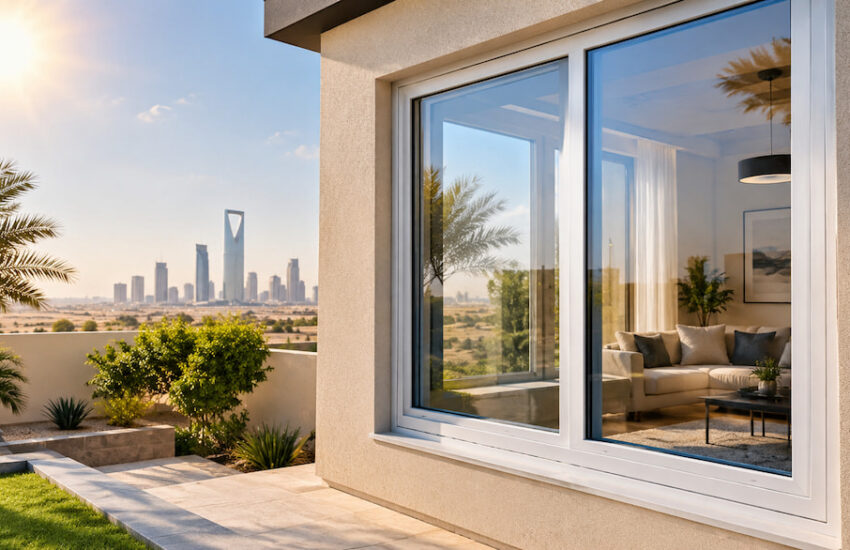
Home insulation is an important consideration for villa owners in Saudi Arabia, where intense sunlight and high outdoor temperatures can increase cooling demands for much of the year. Windows are a particularly important part of the building envelope because heat can pass through the glass, frames and surrounding installation joints. Choosing an appropriate window system can help improve indoor comfort, but the result depends on more than the frame material alone.
UPVC windows are widely considered for residential projects because UPVC has relatively low thermal conductivity compared with metals such as aluminium. However, the actual insulation performance of a finished window depends on the profile design, glazing, seals, hardware, window size and installation quality. For homeowners, architects and property developers, understanding these factors makes it easier to select windows that support the villa’s overall energy efficiency strategy.
This guide explains how UPVC windows contribute to home insulation in Saudi Arabia, what specifications to compare and how to avoid common mistakes when planning a new build or renovation.
Why Window Insulation Matters in Saudi Villas
During Saudi summers, air conditioning is essential for maintaining comfortable indoor temperatures in many homes. If the building envelope allows excessive heat to enter, the cooling system may need to work harder to maintain the desired indoor conditions. Windows can contribute to this heat transfer through both the glazed area and the frame, while poorly sealed perimeter joints can allow unwanted air movement.
The impact varies according to the property’s location, orientation, shading, window area, construction materials and air conditioning system. A large west facing window exposed to strong afternoon sun may create different challenges from a smaller shaded opening. As a result, selecting windows should form part of the wider building design rather than being treated as an isolated purchasing decision.
For villa owners in Riyadh, Jeddah, Dammam and other Saudi cities, the objective is to manage solar heat gain, reduce unwanted heat transfer and limit air leakage while maintaining suitable daylight, ventilation and views.
How uPVC Windows Help Reduce Heat Transfer
UPVC, or unplasticized polyvinyl chloride, is a rigid plastic commonly used to manufacture window frames. Its relatively low thermal conductivity can reduce heat transfer through the frame compared with many conventional metal frame materials. Some uPVC systems also incorporate multiple internal chambers that help manage heat flow through the profile.
However, the number of chambers alone does not establish the thermal performance of a window. The profile’s overall design, construction, reinforcement, seals and connection with the glazing all affect the finished result. A well designed window system should be evaluated using relevant technical information rather than appearance or chamber count alone.
The glass area also matters. In many windows, glazing represents a substantial portion of the overall opening, so the type of glass and its configuration can strongly influence thermal performance. This is why a high quality frame paired with unsuitable glazing may not deliver the expected improvement in indoor comfort.
The Role of Double Glazing in Home Insulation
Double glazing uses two panes of glass separated by a sealed cavity. Depending on the glass specification, cavity width, gas fill where used, coatings and edge construction, this arrangement can reduce heat transfer compared with basic single glazing.
For Saudi homes, the appropriate glass configuration should address both heat transfer and solar heat gain. These are related but different properties. Heat transfer describes how readily heat moves through a window because of a temperature difference, while solar heat gain concerns the solar energy entering through the glazing.
When comparing products, ask suppliers for the whole window U value or U factor and the solar heat gain coefficient, where available. A lower U value generally indicates less heat transfer under the relevant test conditions. A lower SHGC generally means less solar heat gain, although the appropriate target depends on orientation, daylight requirements and the building’s overall design.
Low emissivity coatings may also help manage heat transfer. Solar control glass can be useful for certain highly exposed windows, but it should be selected carefully to balance cooling needs, natural light and the desired appearance. Not every villa needs the same glass specification, and the best choice should reflect the actual project conditions.
Why Window Seals and Installation Matter
A window may have an efficient frame and advanced glazing yet still underperform if the sash does not close correctly or the perimeter joints are poorly installed. Gaps around the frame can allow air to move between the interior and exterior, placing additional demands on the building’s cooling system and potentially allowing dust to enter.
Effective seals help limit unwanted air leakage when the window is closed. Their performance depends on gasket quality, correct compression, hardware adjustment and the accuracy of fabrication. Installation must also account for appropriate fixing, perimeter sealing and the surrounding wall construction.
For new villas, the installer should verify the dimensions of each opening and ensure the frame is properly positioned and secured. For renovation projects, the existing opening should be inspected for uneven surfaces, damaged finishes or other conditions that could complicate installation. Covering a gap with unsuitable sealant is not a substitute for correcting an installation defect.
After installation, check that each sash operates smoothly, locks correctly and sits evenly against its seals. Persistent draughts, visible gaps or water penetration should be investigated rather than accepted as normal behaviour.
Managing Solar Heat Gain Through Window Placement
The position and size of a window can affect the amount of sunlight entering a room. Large openings may provide attractive views and useful daylight, but their solar exposure needs to be considered during the design stage.
Windows exposed to strong afternoon sunlight may benefit from suitable solar control glazing and external shading. Architectural overhangs, carefully designed screens and other shading elements can reduce direct solar exposure when properly matched to the building’s orientation. Internal blinds and curtains can also improve comfort and reduce glare, although their effect on heat entering through the glazing differs from that of external shading.
Reducing the area of highly exposed glazing may also be worth considering in some designs, provided the change remains consistent with daylight, ventilation, architectural and occupancy requirements. The aim is not to minimize windows indiscriminately but to choose an appropriate balance between solar control, views and indoor comfort.
For an existing villa, reviewing which rooms become hottest and at what time of day can help identify where glazing or shading improvements may have the greatest practical value.
Let’s Talk — Get Your Quote Fast
Need pricing, drawings, or quick product guidance? Contact Maskni Alzaki and we’ll respond with a tailored quotation and technical support.
uPVC Windows and Energy Efficiency: What Homeowners Should Know
Energy efficiency depends on the performance of the entire building. Efficient windows can help reduce unwanted heat transfer, but they work alongside roof and wall insulation, shading, air leakage control, air conditioning efficiency and thermostat settings.
A window replacement may be particularly worthwhile when existing windows have damaged seals, poor fitting sashes or basic glazing that no longer meets the property’s needs. However, the potential savings depend on the original condition, the new specification, the building’s exposure and the operation of the cooling system.
Be cautious of suppliers who promise a fixed percentage reduction in electricity bills without assessing the property. A credible estimate requires information about the existing windows, proposed replacement, building envelope and energy use. Thermal performance figures can help compare products, but they do not automatically translate into a specific household saving.
For larger developments, architects and consultants should consider the proposed window specification within the project’s energy modelling or building performance assessment where applicable. This creates a more reliable basis for evaluating trade offs between cost, comfort and energy demand.
Choosing uPVC Windows for Different Saudi Environments
Saudi Arabia’s regional conditions can influence the details of a suitable window specification. Inland properties may need particular attention to dust control, effective seals and ease of cleaning. Coastal buildings may require suitable corrosion resistance for exposed metal hardware, even though the UPVC frame itself does not rust like ordinary steel.
For a villa in Riyadh, strong summer sun and airborne dust may make glazing selection, shading and maintenance important considerations. In Jeddah or Dammam, humidity and salt exposure can add to the importance of hardware selection and inspection. These are general considerations rather than rigid rules: the actual specification should reflect the property’s orientation, immediate environment and design.
Homeowners should also consider room use. Bedrooms may place a higher priority on comfort and external noise control, while living areas with large glazed openings may require more detailed solar control planning. Bathrooms and kitchens have their own ventilation and privacy requirements.
How to Compare Window Specifications
When requesting quotations, compare the complete window system rather than the uPVC profile alone. Ask for the profile specification, proposed glazing build up, relevant thermal performance figures, seal design, hardware details and installation scope.
Check whether the performance values apply to the glass alone or to the complete window. Glass only figures do not account for heat transfer through the frame and other parts of the assembly. Where possible, request recognized test results or product documentation that identifies the tested configuration and applicable standard.
Also confirm that the quoted configuration matches the intended opening dimensions and operating style. Large windows, special shapes and heavy glazing may require different structural considerations from standard residential openings. Any project specific wind loads, safety glass requirements or other applicable regulations should be assessed by the responsible designer or supplier.
An itemized quotation helps reveal differences in glazing, hardware, installation and warranty coverage. A lower initial price may not represent equivalent thermal performance or the same level of included work.
Common Mistakes When Improving Window Insulation
One frequent mistake is assuming that changing to UPVC frames automatically makes a villa energy efficient. Frame material matters, but the glazing, seals, installation and surrounding building envelope can be equally important. The complete system must be assessed.
Another mistake is choosing glass solely by thickness. Glass thickness can affect structural and safety considerations, but it does not by itself establish the thermal performance of the window. The glass configuration, coatings and other design features need to be considered.
Homeowners should also avoid selecting the darkest glass or the most expensive glazing without first defining the project’s needs. Solar control, visible light, external appearance and cost must be balanced. The right specification is the one that meets the building’s requirements, not necessarily the one with the most features.
Finally, replacing windows while ignoring obvious air leakage around doors, roofs, walls or other openings may limit the overall improvement. A broader inspection can help identify which parts of the building envelope deserve attention first.
Conclusion
Improving home insulation with UPVC windows in Saudi Arabia requires a complete approach to window design. The frame’s thermal properties, glazing configuration, solar heat gain, seals, installation and building orientation all contribute to performance. Selecting one component without considering the others can lead to disappointing results.
For villa owners and project teams, the most effective starting point is to identify the property’s main heat gain problems, compare documented window specifications and confirm that the proposed system suits the building’s exposure and room layout. Installation quality and the rest of the building envelope should remain part of the decision.
If you are planning a new villa or upgrading existing windows, contact Maskni Alzaki to discuss your project requirements and explore suitable uPVC window options for your property in Saudi Arabia.

